

Air Source Heat Pump Cooling: Can Heat Pumps Cool Your Home? 2026 Update

Last updated: October 2026
The short answer: yes, some air source heat pumps can cool a house, but not all of them, and not in the same way. Air-to-air heat pumps are usually reversible, so they cool a room much like an air conditioner. Air-to-water heat pumps can cool only if the model is designed for it and your home has the right emitters, such as fan convectors. Either way, heat pump cooling takes the edge off a hot spell rather than replacing a powerful air conditioner. Trying to decide between a heat pump and an air conditioner? Read air conditioning vs air source heat pumps.
This post looks at air source heat pump cooling in more detail. These nifty devices are not just about heating your home anymore. We will look objectively at this use by also mentioning the downsides of a heat pump so you can make an informed decision. Heat pumps will benefit everyone, though there are some aspects to consider against your budget.
Let's break it all down and see how these versatile systems work during the hotter months.
Air Source Heat Pumps Update 2026
This year, advancements in air source heat pump technology continued and are making these systems more efficient and accessible than ever.
We have overseen the installation of heat pumps that integrate seamlessly into smart home systems, offering enhanced control and energy savings. For instance, smart thermostats now optimise both heating and cooling, allowing homeowners to adjust settings remotely while reducing energy waste.
It never ceases to amaze us how heat pumps continue to gain popularity as homeowners become more aware of the long-term pros, and how improved fan convectors and insulated pipework have made cooling through air-to-water systems more viable.
With government incentives like the Boiler Upgrade Scheme (BUS) continuing to support installations, adopting heat pumps has become increasingly cost-effective. These innovations reinforce air source heat pumps as a sustainable choice for UK homes.
And we expect another exciting year in 2027 for air source heat pumps.
How Air Source Heat Pumps Work
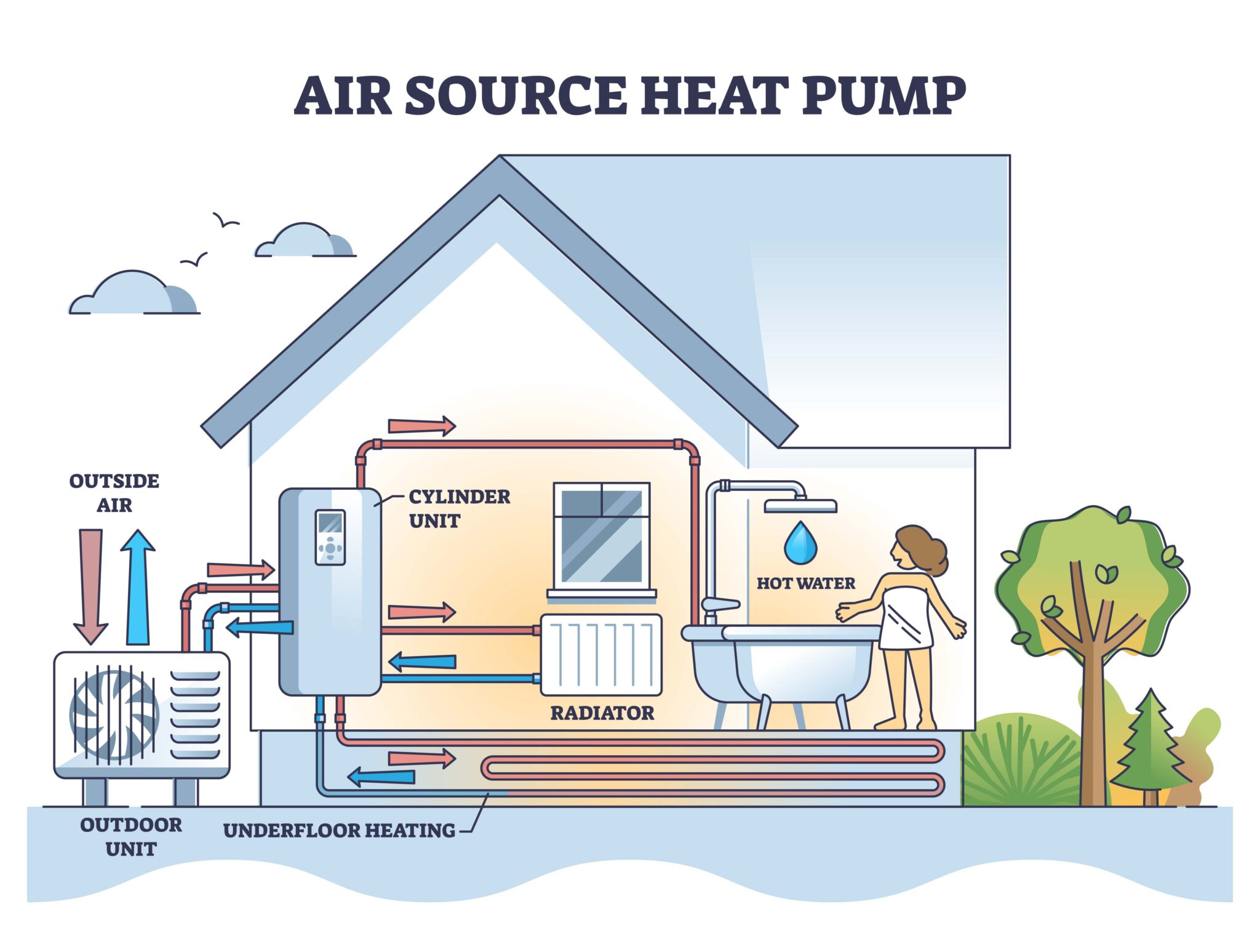
These systems work through the process of heat transfer. When it's cold outside, ASHPs extract heat from the air and transfer it inside, even if the outside temperature is low.
To cool your home, the process reverses. The ASHP extracts heat from the inside of your home and expels it outside. Think of it as a two-way street for heat. This dual functionality makes ASHPs a flexible option, especially if you're looking for year-round comfort.
Air-to-Air Heat Pumps
These are the most common types for both heating and cooling. They work by circulating air, similar to how an air conditioner functions.
Benefits of Air-to-Air Systems
Reversibility: These systems can switch between heating and air-source heat pump cooling efficiently. It's like having a heater and an air conditioner rolled into one.
Efficiency and Speed: Air-to-air units quickly cool your home by circulating cool air.
Downsides
While air-to-air heat pumps sound great, they do have some limitations, particularly here in the UK. For one, they only qualify for a £2,500 Boiler Upgrade Scheme (BUS) grant, against £7,500 for air-to-water, making them a bit of an upfront investment.
If your home already has a traditional water-based heating system, retrofitting for an air-to-air heat pump can be pricey. Plus, you'll still need another system to heat your water.
Air-to-Water Cooling
Here's another option for you: air-to-water heat pumps. These are typically used for heating your home through underfloor heating or radiators, but they can also provide cooling under certain conditions.
How It Works
Air-to-water heat pumps can cool your home by circulating chilled water through pipes. However, there are a couple of catches. Traditional radiators and underfloor heating systems aren't very effective at cooling.
Requirements
Fan Convectors: To make the cooling feature work, you'd need fan convectors that can circulate cool air efficiently.
Insulated Pipework: All pipes need proper insulation to prevent condensation, which can lead to damp issues. Nobody wants that.
With our free consultation, you'll know if a heat pump is suitable for your home.
Send us a message and book a consultation. Find out if a heat pump suits your home.
Air-to-Air vs Air-to-Water Cooling at a Glance
| Air-to-air | Air-to-water | |
| Can it cool? | Yes. Reversible units heat and cool. | Only some models. Check the specification |
| Needs fan convectors? | No. Indoor units blow the cooled air. | Yes, or other emitters designed for cooling. Standard radiators are not suitable. |
| Boiler Upgrade Scheme grant (England and Wales) | £2,500 | £7,500 |
| Typical installed cost | Roughly £2,400 to £8,800, mainly depending on the number of indoor units | Around £12,000 before the grant |
| Best suited to | One or a few rooms, such as bedrooms or a home office | Whole-house heating, with cooling as an extra |
Costs are a guide, not a quote. Air-to-air cost is an estimate reported by ExpertSure citing GreenMatch; air-to-water is the Energy Saving Trust’s typical figure (September 2026).
What Heat Pump Cooling Feels Like in a UK Heatwave
A heat pump with cooling will make a hot room noticeably more comfortable, but it will not turn a heatwave into a spring day. On 19 July 2022, the UK recorded 40.3°C at Coningsby, according to the Met Office, and on a day like that, any cooling system will be working at its limit. With air-to-air, expect a quick drop in temperature in the rooms with indoor units. With air-to-water through fan convectors, expect a slower, gentler effect.
What cooling will not do
- It will not match a powerful air conditioner on the hottest days.
- It will not work through standard radiators.
- It will not stop heat getting in. The Energy Saving Trust says it is usually easier to stop heat coming into a home than to cool it down again, so shade south-facing windows and ventilate at night.
Condensation and insulation
Cold pipework attracts condensation, so chilled pipes need proper insulation. Which? also notes that cooling through underfloor pipes needs careful design to prevent condensation on the floor, and that a cooled floor may not suit everyone.
Alternatives to Air-to-Air Heat Pumps
You can modernise your existing system by switching from gas to an air-to-water heat pump. This offers a balanced way to maintain your comfort levels without going overboard.
Efficiency: Higher efficiency can mean lower energy bills.
Dependability: Reliable heating and zero carbon tariffs make this an attractive choice.
Government Incentives and Grants

The UK government offers various grants to encourage energy-efficient home improvements. The Boiler Upgrade Scheme (BUS) is one such scheme aimed at reducing the cost of installing low-carbon heating systems like air source heat pumps.
Details
Eligibility: Make sure you check if you're eligible for the BUS grant or other incentives. This can significantly offset initial costs.
Potential Savings: Grants can save you thousands, making it easier to adopt these air source heat pump cooling technologies.
So, can air source heat pumps cool your home?
Absolutely, they can. However, the best type of ASHP for you—air-to-air or air-to-water—depends on your unique needs and current heating setup. While the initial investment may be considerable, the long-term benefits such as energy efficiency and dual functionality make it worth considering.
Before making any decisions, consider consulting with a professional at S Fearn Plumbing & Heating to assess your specific requirements. We can provide tailored advice and help you figure out the most cost-effective and efficient solution for your home.
A couple more points worth a mention...
Smart Home Integration
In today's digital age, integrating heat pumps with smart home systems offers additional benefits.
Smart thermostats can learn your habits and adjust the temperature accordingly, optimising the cooling efficiency of your heat pump.
This means you can enjoy a consistently comfortable home without wasting energy. Smart systems enable remote access, allowing you to control your home's cooling needs even when you're away.
This level of control not only enhances convenience but also contributes to energy savings.
Environmental Benefits
Using heat pumps for cooling is not just an efficient choice; it's an environmentally responsible one.
Heat pumps reduce reliance on fossil fuels and lower your carbon footprint. By fulfilling both heating and cooling requirements, they offer a sustainable alternative to traditional systems.
This aligns with global efforts to combat climate change and promotes a greener future.
FAQs on Cooling Homes With Air Source Heat Pumps

Can ASHPs completely replace air conditioning units?
While they can serve a similar function, ASHPs may not be as powerful as dedicated air conditioning units, especially during extremely hot days.
How energy-efficient are ASHPs in cooling mode?
They are quite efficient but can lose some effectiveness in very hot climates. In the relatively mild UK summers, they perform well.
Are there any specific maintenance requirements for ASHPs used for cooling?
Regular maintenance, such as cleaning or replacing filters and ensuring coils are clean, will help maintain efficiency and extend the life of the unit.
How do air source heat pumps utilise thermal energy from the air?
Air source heat pumps extract thermal energy from outside air, even in cold conditions, and convert it into heat for home heating and hot water.
How do heat pumps provide a cooling system in addition to heating?
Air source heat pumps can reverse their operation to provide an efficient cooling system. In cooling mode, they extract heat from inside the home and transfer it outside, effectively lowering the indoor temperature.
What is air source heat pump cooling mode?
Cooling mode runs the heat pump’s refrigerant cycle in reverse. Instead of bringing heat in from outside, the system removes heat from inside your home and releases it outdoors. Not every heat pump has it, so check the specification.
What is a heat pump cooling system?
It is the heat pump together with the controls and the emitters that deliver the cooling. With an air-to-air system, that is indoor units blowing cooled air. With an air-to-water system, it is fan convectors or suitable underfloor pipework carrying chilled water. Baxi says the whole system must be designed and set up for both heating and cooling.
Do heat pumps cool in summer?
Only if they are designed to. Reversible air-to-air heat pumps cool as well as heat, but Which? points out that not all air-to-water models can cool, so ask before you buy.
How much does it cost to run a heat pump in cooling mode?
It depends on the unit, how long it runs and your tariff. Multiply the unit’s electricity use in kilowatts by the hours it runs and by your price per kWh. For comparison, the Energy Saving Trust puts a fan at £0.14 to £0.30 a day and a portable air conditioner at £4.62 to £5 a day in Great Britain. Which? warns that adding air-to-air cooling to a home without air conditioning will add considerably to your annual energy use.
And there you have it!
If you've been pondering over the pros and cons of air source heat pumps, hopefully, this guide has given you a clearer picture.
Their ability to cool your home can be a significant advantage, provided you weigh the initial costs and specific requirements. Keep pushing forward, and here's to a cooler, more energy-efficient home!